Liquid swap: How AMM token swaps and liquidity work
Liquid swap Is a practical guide to AMM token swaps and liquidity
Liquid swap Is a way to exchange digital assets through liquidity pools instead of a traditional order book. In most DeFi settings, an automated market maker sets the swap price from pool balances, users trade against that pool, and liquidity providers earn a share of fees while accepting market and smart contract risk. The core idea is simple: Liquid swap connects traders who want fast token exchange with providers who supply the assets that make those trades possible.
Liquid swap can refer broadly to token swapping systems that use pooled liquidity, and it can also appear as a product name in different crypto platforms. This page explains the concept without claiming affiliation with any exchange, wallet, or protocol. Before using a specific service, verify the current details, supported assets, fees, risks, and availability through that service's official sources.
What is Liquid swap?
Liquid swap is a practical phrase for an AMM-style crypto exchange workflow. Instead of waiting for another trader to post a matching buy or sell order, a user swaps one token for another using reserves already deposited in a pool. The pool might hold stablecoins such as dollar-pegged assets, volatile assets such as ETH-like tokens, or a paired market such as a wrapped asset against a stablecoin.
Liquid swap matters because liquidity is the working capital of DeFi. A market with deep liquidity can usually handle larger trades with less price movement. A thin pool can still execute quickly, but the final quote may move more sharply. That difference is why experienced users look beyond the headline swap button and check the pool depth, route, fee tier, and expected price impact before confirming a transaction.
The phrase also points to a larger pattern in crypto infrastructure. Automated market makers, decentralized exchanges, liquidity provider tokens, stablecoin pools, routers, bridges, and wallet approvals all sit near the same workflow. Liquid swap is the user-facing moment where those components meet: one asset goes in, another asset comes out, and the pool accounting updates in the background.
How does Liquid swap work in an AMM pool?
Liquid swap systems commonly use formulas to maintain a relationship between the assets in a pool. A simple constant-product AMM keeps the product of two token balances roughly consistent, so buying one asset makes it scarcer in the pool and raises its quoted price relative to the other asset. Other AMM designs use stable-swap curves, concentrated liquidity, or hybrid routing to reduce slippage for assets that are expected to trade close together.
Liquid swap pricing is therefore not a fixed menu price. It is a live quote derived from reserves, trade size, pool fees, and sometimes routing across multiple pools. A small trade in a deep stablecoin pool may show only a tiny difference between the expected output and the final received amount. A large trade in a volatile or shallow pool may create visible price impact because the swap changes the pool balance more dramatically.
The protocol or platform typically charges a fee on each trade. Part of that fee may go to liquidity providers, and part may go to a protocol treasury, exchange operator, or other configured recipient depending on the design. Liquid swap users should not assume fee rules are identical across platforms. A decentralized exchange, a centralized exchange AMM product, and a wallet-integrated swap aggregator may all present similar buttons while using different custody, routing, and fee arrangements.
Why do people use Liquid swap?
Liquid swap is useful when a person wants a direct token exchange without navigating a full trading interface. A user may need stablecoins for payments, a governance token for participation, a gas token for network fees, or a different asset before entering another DeFi application. The appeal is speed and clarity: enter an amount, review the output estimate, set risk controls, and confirm if the terms make sense.
Liquid swap can also be relevant for liquidity providers. By depositing assets into a pool, providers help other users trade and may earn fees. That income is not guaranteed profit, because pool shares can lose value relative to simply holding the tokens. Still, for users who understand impermanent loss, pool composition, fee generation, and contract risk, liquidity provision can be a deliberate DeFi strategy rather than a passive savings account.
For a new user, Liquid swap often feels easier than order-book trading because there is no need to choose limit prices, maker or taker behavior, or order duration. The tradeoff is that the convenience comes with a need to understand slippage and execution conditions. A swap can be simple at the screen level while still being financially and technically complex underneath.
How do you complete a Liquid swap step by step?
Liquid swap workflows vary by platform, but the careful process is usually similar. The most important habit is to slow down before signing. Crypto transactions are often irreversible, and a familiar interface can still lead to mistakes if the wrong network, token contract, or approval amount is selected.
Choose the asset you want to spend and the asset you want to receive.
Confirm the network, token contract, pool route, estimated output, fees, and price impact.
Set a slippage tolerance that fits the asset and market conditions.
Approve token spending only when needed, and avoid unlimited approvals unless you understand the risk.
Submit the swap, then check the confirmed transaction and wallet balance.
Liquid swap platforms may show additional fields such as minimum received, deadline, gas estimate, routing path, pool share, or execution venue. These fields are not decoration. Minimum received protects against receiving much less than expected. A deadline prevents an old transaction from executing later in a changed market. The routing path tells you whether the trade is direct or passes through intermediate assets.
In practice, Liquid swap users should test unfamiliar workflows with a small amount first. A test swap can reveal whether the wallet is connected to the correct network, whether the asset appears properly after settlement, and whether the fee model is acceptable. This is especially helpful when using new chains, newly listed tokens, wrapped assets, or cross-chain routes.
What fees, slippage, and price impact should you expect?
Liquid swap costs usually include the pool trading fee, network transaction fee, possible platform fee, and the market effect of the trade itself. Slippage is the difference between the quote you expect and the final execution you accept. Price impact is the degree to which your own trade moves the pool price. These ideas are related but not identical, and confusing them can lead to poor decisions.
Liquid swap feels inexpensive when pools are deep, assets are closely correlated, and network fees are low. Stablecoin pools are a common example because assets designed to track the same unit can often swap with lower volatility. Even then, users should check whether a stablecoin has depegging risk, redemption concerns, liquidity fragmentation, or chain-specific wrapper risk.
For volatile assets, Liquid swap quotes can change quickly. A low slippage tolerance may cause the transaction to fail if the market moves before confirmation. A high slippage tolerance may allow execution at a worse price than intended. There is no universal setting that is always best. The right tolerance depends on token liquidity, market volatility, trade size, network congestion, and how urgent the swap is.
Is Liquid swap safe?
Liquid swap is not automatically safe just because the interface is simple. The main risks include smart contract bugs, malicious tokens, bad approvals, volatile prices, shallow liquidity, oracle or routing issues, and user error. In centralized or custodial versions, users also need to consider custody, account controls, withdrawal rules, and the platform's operational risk.
Liquid swap safety begins with verification. Check that you are on the intended app or exchange, confirm official token contract addresses, and be cautious with links from ads, messages, or copied search results. Review whether the protocol has audits, bug bounty information, public documentation, transparent fee rules, and a history of responsible incident handling. None of these checks removes risk, but they can reduce avoidable mistakes.
Liquid swap liquidity providers face additional concerns. Impermanent loss can occur when the relative price of deposited assets changes, leaving the pool position worth less than simply holding the same assets outside the pool. Yield figures can be temporary, token incentives can end, and high annualized returns may reflect high risk. This page is educational, not financial advice, and users should evaluate their own risk tolerance.
How is Liquid swap different from an order book exchange?
Liquid swap and order-book trading solve the same basic problem in different ways. An order book matches buyers and sellers at posted prices. An AMM pool lets users trade against pooled reserves at formula-driven prices. Order books can be efficient for active markets with many participants, while AMMs can provide always-available quotes as long as there is pool liquidity.
Liquid swap may be more approachable for routine DeFi actions because the interface can hide many trading mechanics. However, order books may provide more control for advanced traders who want limit orders, visible market depth, and specific execution strategies. Neither model is universally better. The right choice depends on trade size, asset liquidity, custody preference, fees, and whether the user values speed or price control.
Feature
Liquid swap AMM
Order book exchange
Pricing
Based on pool balances and formulas
Based on posted bids and asks
User flow
Enter amount and confirm quoted output
Choose order type, price, and size
Main concern
Slippage, pool depth, contract risk
Spread, order fill, exchange rules
Liquidity source
Liquidity providers deposit pool assets
Market makers and traders post orders
Liquid swap aggregators add another layer by searching across pools or venues to find a better route. A route might split a trade across multiple pools, use an intermediate asset, or compare liquidity sources. Aggregation can improve execution, but users still need to review approvals, fees, minimum received, and the identity of the platform handling the transaction.
What should liquidity providers know before adding funds?
Liquid swap liquidity provision is different from holding tokens in a wallet. When you add funds to a pool, you usually receive a representation of your pool share. That share changes in value as trades occur, fees accumulate, incentives are distributed, and token prices move. If one asset rises or falls sharply against the other, the pool automatically rebalances through trader activity.
Liquid swap providers should understand the pool type. A stablecoin pair is not the same as a volatile token pair. A concentrated liquidity position is not the same as a full-range position. A single-sided deposit may still be converted internally into a pool position. A platform may show estimated returns, but those estimates often depend on recent volume, token rewards, and assumptions that can change quickly.
The best preparation is practical: read the platform documentation, examine historical pool volume, understand withdrawal mechanics, and consider how the position behaves in both calm and stressed markets. Liquid swap rewards can look attractive, but the real result depends on fees earned, asset price movement, gas costs, incentive durability, and whether the underlying contracts and assets remain reliable.
How should a beginner approach Liquid swap?
Liquid swap is easiest to learn when treated as a workflow instead of a shortcut. Start with familiar assets, small amounts, and clear reasons for each transaction. Avoid swapping into tokens you do not understand simply because they are available in a pool. Availability is not endorsement, and a token can have liquidity while still carrying severe market, technical, or governance risk.
Liquid swap beginners should also keep wallet hygiene in mind. Use hardware wallets for larger balances where appropriate, separate experimental wallets from long-term holdings, and periodically review token approvals. If a swap asks for unusual permissions or routes through unknown assets, pause and verify. Good habits matter because DeFi interfaces can make high-risk actions feel routine.
For more background, readers may find related guides on and useful before committing funds. Liquid swap becomes easier to evaluate once the basic vocabulary is clear: reserves, pool share, slippage tolerance, minimum received, impermanent loss, gas, wrapped assets, bridges, and contract approvals.
What is the practical takeaway for Liquid swap users?
Liquid swap is best understood as a convenient exchange method powered by pooled assets and automated pricing. It can make DeFi workflows faster, help markets remain available outside traditional order books, and give liquidity providers a way to participate in fee generation. At the same time, Liquid swap is not risk-free, and the simplest screens often deserve the most careful review.
Liquid swap decisions should be based on the current quote, the credibility of the platform, the depth of the pool, the quality of the token, and the user's own risk limits. Verify official information, avoid rushed transactions, and remember that crypto markets can change faster than a saved guide can. Used carefully, Liquid swap is a useful part of the DeFi toolkit; used casually, it can expose users to losses they did not intend to take.
Reader rating:
5.0 / 5
based on 458 ratings
Questions and Answers
What does Liquid swap mean in crypto?
Liquid swap generally means exchanging crypto assets through a liquidity pool, often using an automated market maker rather than a traditional order book. A user selects the token to spend and the token to receive, then the pool calculates a quote from its reserves. The term may also appear as a product name, so users should verify the exact platform details before transacting.
How does a Liquid swap price get calculated?
A Liquid swap price is usually calculated from pool balances, the AMM formula, trade size, and applicable fees. If your trade is large relative to the pool, it can move the price more and create higher price impact. Some systems route trades through multiple pools or use stable-swap curves for closely related assets, which can reduce but not eliminate slippage.
Can I earn money by providing liquidity to Liquid swap pools?
Liquidity providers may earn a share of trading fees or token incentives, but returns are not guaranteed. Pool positions can lose value through impermanent loss, volatile asset prices, contract problems, changing reward programs, and withdrawal costs. Before adding funds, review the pool type, asset quality, fee history, and official documentation, and treat yield estimates as variable rather than promised income.
What are the main risks of using Liquid swap?
The main risks include slippage, price impact, smart contract bugs, fake tokens, malicious approvals, shallow liquidity, network congestion, and user mistakes such as choosing the wrong chain. Custodial or exchange-based versions can add platform and withdrawal risk. A careful user verifies official sources, checks token contracts, uses reasonable slippage settings, and avoids signing transactions they do not understand.
Is Liquid swap better than using an order book exchange?
Liquid swap is often simpler for direct token exchanges because the user can trade against pooled reserves without placing an order. An order book may offer more control through limit prices, visible depth, and advanced execution tools. The better option depends on asset liquidity, trade size, fees, custody preference, and whether the user prioritizes quick execution or precise price control.
What slippage setting should I use for a Liquid swap?
There is no single slippage setting that works for every Liquid swap. Lower tolerance can protect against a bad fill but may cause the transaction to fail in a fast market. Higher tolerance can improve completion odds but may accept a worse price. Consider token volatility, pool depth, trade size, route complexity, and network conditions before confirming.
Should beginners use Liquid swap for new or unknown tokens?
Beginners should be cautious with new or unknown tokens, even when a Liquid swap pool is available. Liquidity does not prove that a token is legitimate, stable, or fairly priced. Start with small test transactions, verify token contract addresses through official sources, review approvals, and avoid acting on hype or unsolicited links. This is educational information, not financial advice.
Binance Bolsters DeFi Presence with Binance Liquid Swap
The Binance Liquid Swap platform is an automated market maker (AMM) pool product and hosts different pools of liquidity that allow its users to exchange crypto assets.
Major cryptocurrency exchange
Binance
has bolstered its presence in the decentralized finance world with the
launch
of Binance Liquid Swap. The Binance Liquid Swap product is a token swapping liquidity platform, offering an improved exchange model to foster more earnings from users.
Through Binance Liquid Swap, users can pool their tokens to provide the liquidity for which they can earn rewards as well as cut in on transaction fees. The product offering will be the first of its kind among the core centralized cryptocurrency exchanges to date and it is targeted at existing swapping platforms including Uniswap, with the potential of creating the necessary competition.
About New Binance Liquid Swap Trading Platform
The Liquid Swap trading platform is aimed at helping Binance’s existing account holders reap the benefits of DeFi services. Besides the promise to offer instant liquidity, the platform also comes with low fees.
The Binance Liquid Swap platform is an automated market maker (AMM) pool product and hosts different pools of liquidity that allow its users to exchange crypto assets.
According to the official announcement, when you place your crypto funds into the liquidity pools on Binance Liquid Swap, you get to harness the power of an AMM pricing module. This can give you stable prices and lower fees for both small and large transactions, which are done via instant swaps.
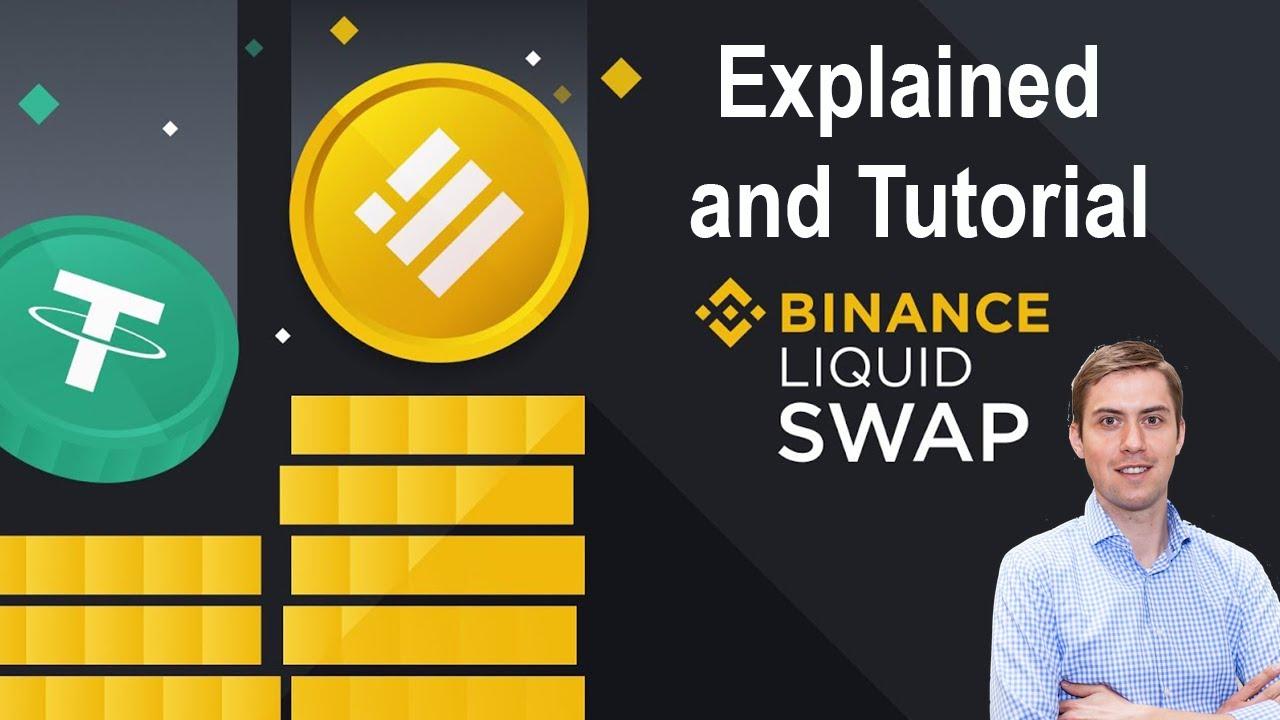
Currently, the Binance Liquid Swap platform offers three digital currency pairs or tokens including, USDT/BUSD, BUSD/DAI, and USDT/DAI. As detailed, the transaction fees and prices are determined by the total amount of assets in the pool.
Binance CEO
Changpeng Zhao
stated
that the new products aimed to attract more volume and participants:
“We hope to further the growth of the DeFi marketplace and empower our users with more earning power and easier liquidity through a centralized AMM pool with the credibility, safety, and security provided by Binance.”
Binance Is Aggressive with Its DeFi Drive
Binance’s drive in the decentralized finance ecosystem has picked a faster pace in the past weeks. Besides the
launching
of a DeFi/
USDT
index by Binance Futures, the exchange also launched the Binance Smart Chain to promote interoperability and programmability with the Binance Chain while also
enabling
smart contracts on the platform. The Binance Smart Chain is also compatible with the Ethereum Virtual Machine (EVM).
Binance-owned
WazirX,
a top crypto exchange in India has also made futuristic leaps into the DeFi world with the launching of a DeFi protocol on the
Matic Network
. Since the CEO, Changpeng Zhao declared his admiration for decentralized finance and its revolutionary potentials, Binance’s growth model has been restructured to tag along with this trend.
With the new product offerings being integrated into the existing Binance’s platform and products, users are generally expected to embrace the Binance Liquid Swap trading platform.
Disclaimer:
Coinspeaker is committed to providing unbiased and transparent reporting. This article aims to deliver accurate and timely information but should not be taken as financial or investment advice. Since market conditions can change rapidly, we encourage you to verify information on your own and consult with a professional before making any decisions based on this content.
Benjamin Godfrey is a blockchain enthusiast and journalist who relishes writing about the real life applications of blockchain technology and innovations to drive general acceptance and worldwide integration of the emerging technology. His desire to educate people about cryptocurrencies inspires his contributions to renowned blockchain media and sites.